PRP for skin and hair
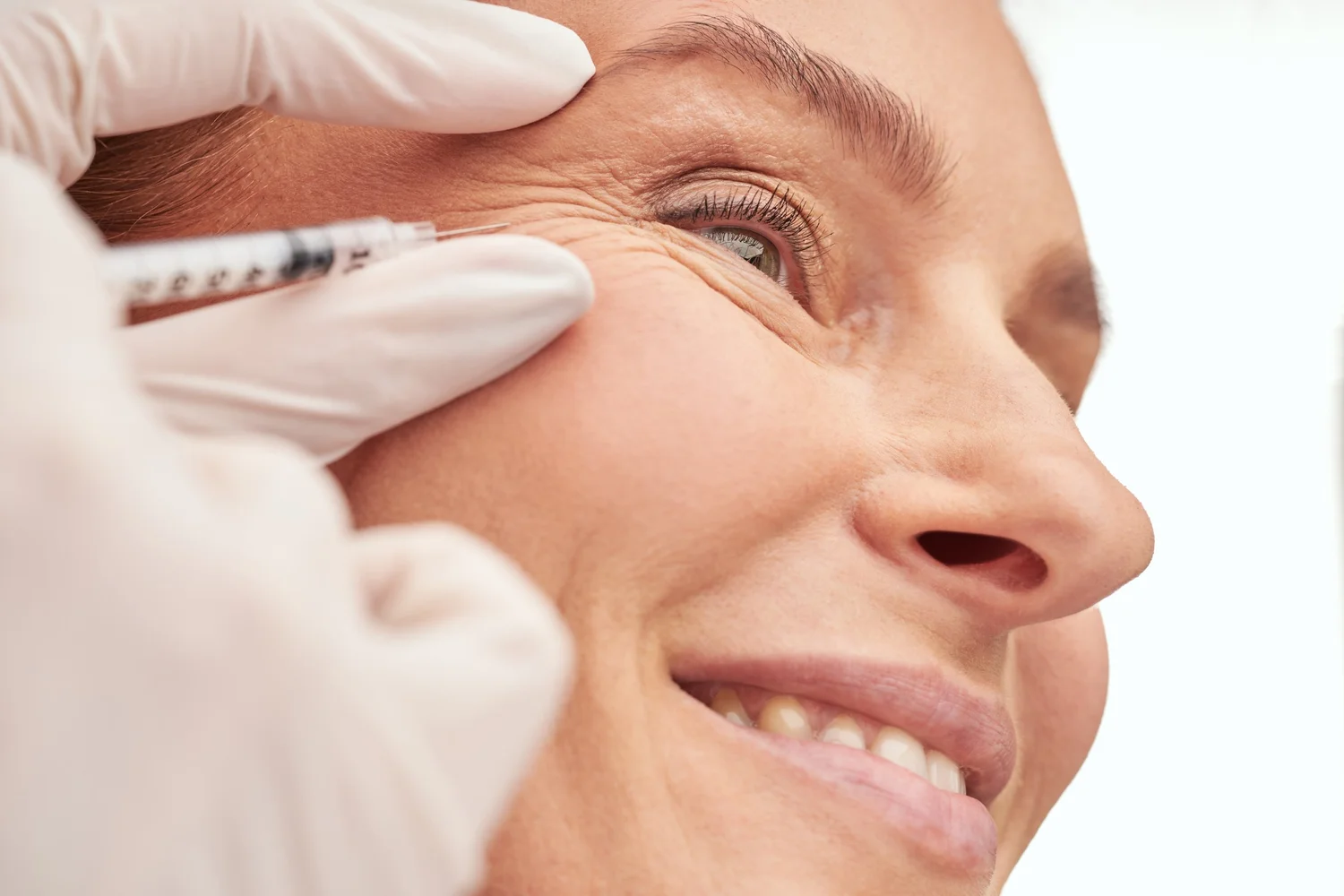
PRP (Platelet Rich Plasma) is a treatment that uses your own body’s capacity for repair to renew the skin, reduce dark circles and stimulate hair growth. A small amount of blood is taken, from which a plasma with a high concentration of platelets is isolated. These platelets contain growth factors that can improve skin structure and stimulate hair growth.
This treatment always starts with a diagnostic consultation.
Areas
Face, Under-eye area, Scalp
Booking
After diagnostic consultation
Price
From €305
PRP: what is it for and how many sessions?
PRP uses the platelets from your own blood, rich in growth factors, to regenerate the skin, reduce dark circles due to thin skin and stimulate hair growth. Count on 2 to 3 sessions for the face and dark circles, 3 to 4 for the hair, 4 weeks apart, followed by maintenance.
In brief
- Prepared from your own blood: the risk of an allergic reaction is low.
- Face: 2 to 3 sessions 4 weeks apart, then maintenance 1 to 2 times a year.
- Hair: 3 to 4 sessions 4 weeks apart, then maintenance every 4 to 6 months.
- Before: if possible, no anti-inflammatories for 7 days; drink at least 1 litre of water a day from the day before.
- After: redness and swelling for 1 to 2 days; do not wash the scalp for 12 hours.
What we do not promise: hair regrowth on a completely bald area. PRP acts on follicles that are still active, in early to moderate hair loss.
Want to know whether this treatment suits you?Plan my consultation
What does PRP involve?
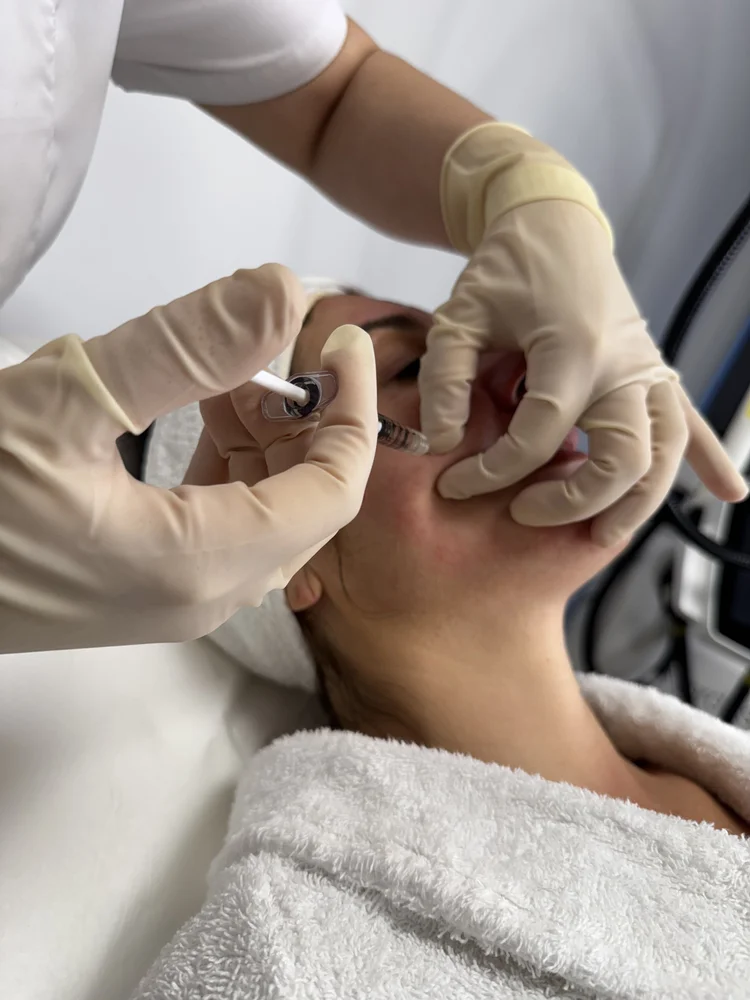
A small amount of blood is taken and processed in a specific medical system to isolate the plasma with a high concentration of platelets. These platelets contain growth factors that can improve skin structure and stimulate hair growth. The plasma is then applied to the area to be treated with fine injections.
Face: skin quality
PRP stimulates collagen and elastin production, which can improve skin firmness and texture and make fine lines less visible.
- Tired or dull skin
- Fine lines and laxity
- Skin recovery after laser or microneedling
- Support for skin quality, without synthetic fillers
Dark circles under the eyes
The under-eye area is a sensitive area. PRP stimulates circulation and can reduce bluish discolouration and improve skin thickness, which can make dark circles less visible.
Please note: PRP only works on dark circles caused by thin skin or reduced circulation, and has little or no effect on pigment-related dark circles.
Hair loss and thinning hair
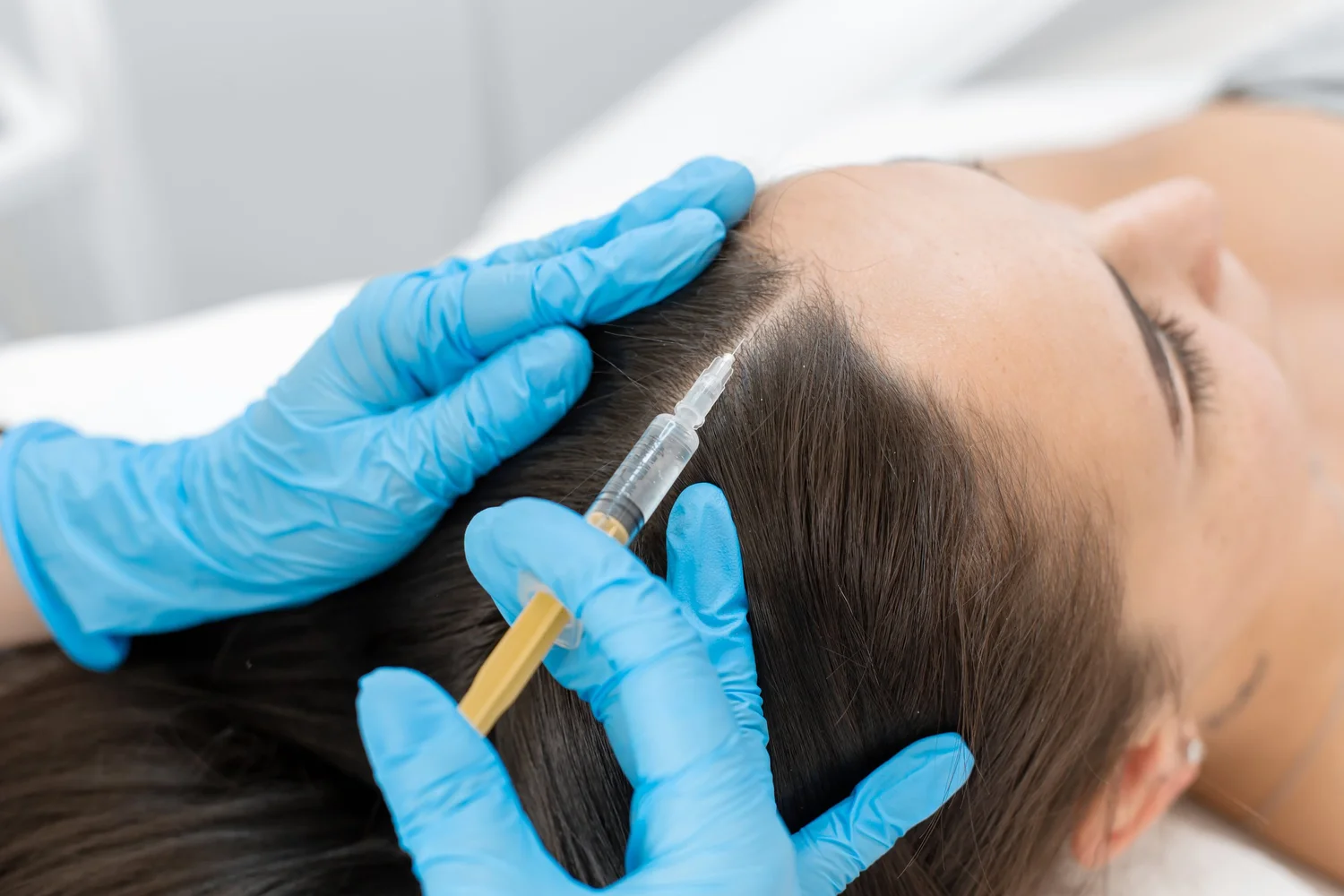
PRP injections into the scalp stimulate the follicles and prolong the growth phase of the hair. The treatment is indicated for early to moderate hair loss, thinning hair or as maintenance after a hair transplant.
- Androgenetic alopecia, in men and women
- Diffuse hair loss
- Hair loss after childbirth
- As support after a hair transplant
- Preventively, at the first signs of hair loss
PRP in practice
- Prepared from your own blood: the risk of an allergic reaction is low.
- Indications: skin quality, dark circles and hair loss.
- Combinable: PRP can be combined with microneedling, lasers, mesotherapy or hyaluronic acid injections.
Preparation and follow-up
- Before the treatment: if possible, avoid anti-inflammatories (such as ibuprofen or diclofenac) for at least 7 days. Never stop anticoagulants or prescribed aspirin without the agreement of the doctor who prescribed them; mention them during the consultation. Drink enough water, at least 1 litre a day, from 24 hours before.
- During the treatment: the blood is taken, processed and then finely injected. For the face, an anaesthetic cream can be applied beforehand if you wish.
- After the treatment: the skin may be a little red and swollen, which usually disappears within 1 to 2 days. For the scalp, do not use hair products for 24 hours and do not wash your hair within 12 hours.
How many sessions?
The number of sessions depends on the indication and your goals:
- Face: usually 2 to 3 sessions 4 weeks apart, then maintenance 1 to 2 times a year
- Dark circles: 2 to 3 sessions on average, depending on severity
- Hair: 3 to 4 sessions 4 weeks apart, then maintenance every 4 to 6 months
Medical information provided by the Arsenal Esthetics team. Results vary from person to person.
PRP (skin and hair): risks and contraindications
We go through these points with you during the prior consultation. Always mention your current treatments, your medical history and a possible pregnancy.
Possible side effects
- Redness, swelling and small bruises for 1 to 2 days.
- Temporary sensitivity of the scalp.
- Rarely: infection at the injection site.
When this treatment is not suitable
- Clotting disorders or anticoagulants.
- Blood diseases or ongoing cancer treatment.
- Active infection.
- Pregnancy, as a precaution.
- Anticoagulants or prescribed aspirin: mention them; never stop them without the agreement of the doctor who prescribed them.
Frequently asked questions: PRP (skin and hair)
How does PRP work?
A small amount of blood is drawn and processed to isolate a plasma concentrated in platelets. Their growth factors stimulate collagen, skin structure and the follicles. The plasma is re-injected finely.
Does PRP help with dark circles?
Yes, for dark circles due to thin skin or reduced circulation: it can improve skin thickness and reduce the bluish tint. It has little or no effect on pigmented dark circles.
For which hair loss?
Early to moderate hair loss, thinning hair, androgenetic alopecia in men and women, diffuse hair loss, or as support after a hair transplant.
How many sessions are needed?
Face: 2 to 3 sessions. Dark circles: 2 to 3 sessions. Hair: 3 to 4 sessions. Always 4 weeks apart, followed by maintenance.
How do I prepare?
If possible, avoid anti-inflammatories for at least 7 days (never stop anticoagulants or prescribed aspirin without your doctor’s agreement), and drink at least 1 litre of water a day from 24 hours before.
Is it painful?
For the face, a numbing cream can be applied beforehand if you wish. The blood is drawn, processed and then injected finely.
Another question? Ask the secretariat or bring it to your consultation.Plan my consultation