Microneedling: skin texture, pores and acne scars
Fine lines, acne scars, enlarged pores, dull skin or mild pigment spots are all indications for microneedling: ultra-fine needles create micro-channels in the skin. These controlled micro-injuries activate the natural repair mechanism and the production of new collagen and elastin, which can improve the firmness, evenness and radiance of the skin. Because it produces no heat and does not act directly on pigment, microneedling also suits very dark skin (Fitzpatrick VI).
This treatment always starts with a diagnostic consultation.
Areas
Face
Booking
After diagnostic consultation
Price
From €145
Microneedling: how many sessions and what result?
For a longer-lasting effect, count on three to five sessions four weeks apart; collagen production then continues for several months. The needles create micro-channels that activate skin repair, which can smooth texture, refine pores and soften acne scars and fine lines. Without heat, microneedling also suits very dark skin.
In brief
- Three to five sessions, four weeks apart; collagen rebuilds over several months.
- Also suitable for very dark skin (Fitzpatrick VI): no heat, adapted needle depth (usually 0.5 to 1.0 mm).
- Possible active ingredients in the micro-channels: hyaluronic acid, tranexamic acid, vitamin C or PRP.
- Redness or slight swelling for 24 to 48 hours.
- No make-up, sauna or intensive sport on the first day; SPF 50 every day.
What we do not promise: the removal of scars. For deep scars, radiofrequency microneedling or the CO₂ laser may be more suitable, without erasing them completely.
Want to know whether this treatment suits you?Plan my consultation
What does microneedling involve?
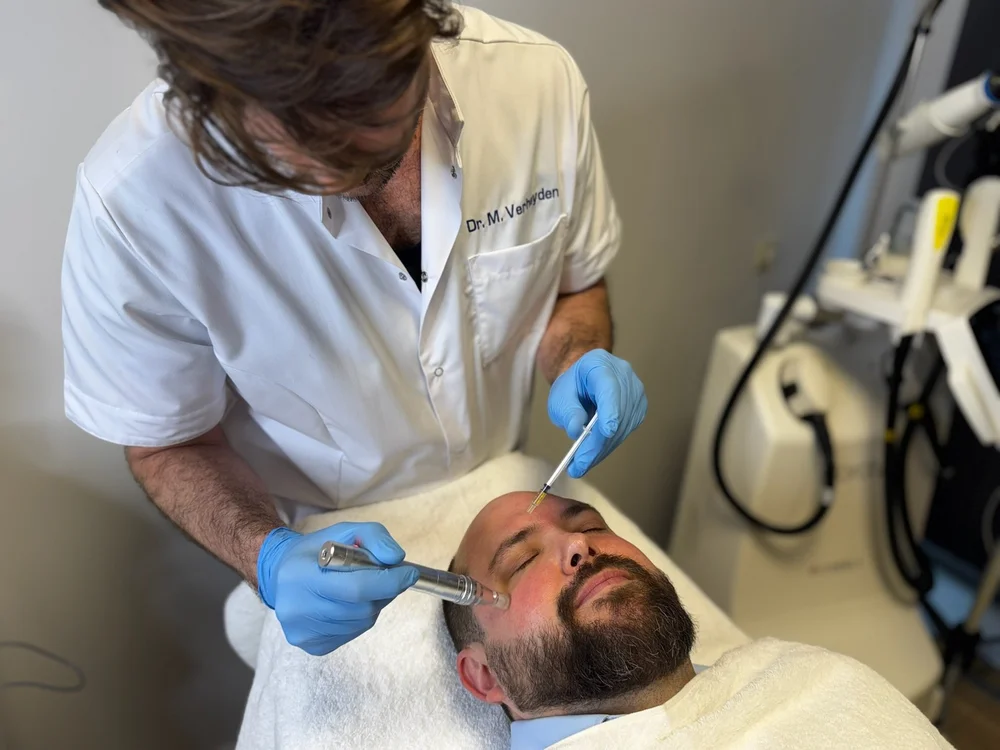
Microneedling is a treatment in which ultra-fine needles create microscopic channels in the skin. These controlled micro-injuries activate the natural repair mechanism and the production of new collagen and elastin. This can improve the firmness, evenness and radiance of the skin.
When is microneedling indicated?
- Fine lines and first wrinkles
- Acne scars and enlarged pores
- Dull or tired skin
- Mild pigment spots
- Specific pigmentation disorders
During the treatment, we can deliver active ingredients in a targeted way, for example tranexamic acid for pigment. Hyaluronic acid, vitamin C or PRP are other options for extra hydration and renewal.
Also suitable for very dark skin (Fitzpatrick VI)
Microneedling produces no heat and does not act directly on pigment. It therefore also suits skin type VI, with an adapted protocol. We choose an appropriate needle depth, usually 0.5 to 1.0 mm, use gentle serums and advise strict sun protection (SPF 50) to prevent post-inflammatory hyperpigmentation.
How the treatment works
- Consultation and skin analysis: at a first consultation, a doctor sets the indication and the treatment plan, possibly together with a specialised nurse.
- Preparation: the skin is cleansed, disinfected and, if needed, numbed.
- Microneedling: sterile needles create controlled micro-perforations to activate the skin.
- Active ingredients: depending on your indication, we apply hyaluronic acid, tranexamic acid, vitamin C or PRP into the micro-channels.
- Soothing cream, mask or LED: to calm the skin and support recovery.
Results and course of treatment
A first improvement in radiance may appear after the first session. For a longer-lasting effect, we advise three to five sessions, four weeks apart. Collagen production then continues for several months.
Classic microneedling or with radiofrequency?
Classic microneedling works purely mechanically and suits skin texture, light scars and pores. Radiofrequency microneedling (MRF) combines the needles with radiofrequency heat: it has a stronger effect on firming and deeper scars, but needs a little more recovery. During the consultation, we decide together which technique best suits your goals.
Aftercare
Redness or mild swelling usually disappears within 24 to 48 hours. Avoid make-up, saunas and intense exercise on the first day. Protect your skin every day with SPF 50 for an optimal result.
Medical information provided by the Arsenal Esthetics team. Results vary from person to person.
Microneedling: risks and contraindications
We go through these points with you during the prior consultation. Always mention your current treatments, your medical history and a possible pregnancy.
Possible side effects
- Redness and slight swelling for 24 to 48 hours, a sunburn-like feeling.
- Small pinpoint bleeding during the session, temporary dryness.
- Less often: infection or hyperpigmentation, especially if aftercare or sun protection is not followed.
When this treatment is not suitable
- Active acne, wound or skin infection in the area.
- Active herpes.
- Recent isotretinoin treatment.
- History of keloid scars.
- Clotting disorders or anticoagulants: mention them during the consultation.
- Pregnancy, as a precaution.
Frequently asked questions: microneedling
How many sessions are needed?
Three to five sessions, four weeks apart, for a longer-lasting effect. A first improvement in radiance may appear earlier, but collagen rebuilds over several months.
Is microneedling suitable for dark skin?
Yes, including skin type VI. It produces no heat and does not act directly on pigment. We adapt the needle depth and advise strict SPF 50 to avoid hyperpigmentation.
How does it differ from radiofrequency microneedling (MRF)?
Classic microneedling works mechanically and suits texture, pores and light scars. MRF adds radiofrequency heat: a stronger effect on firming and deeper scars, with a little more recovery.
Which ingredients can be applied during the session?
Depending on your indication: tranexamic acid for pigment, hyaluronic acid, vitamin C or PRP from your own blood.
What is the recovery like?
Redness or slight swelling usually disappears within 24 to 48 hours. Avoid make-up, sauna and intensive sport on the first day.
Is it painful?
You feel a prickling sensation, depending on depth and area. If needed, a numbing cream is applied before the session.
Another question? Ask the secretariat or bring it to your consultation.Plan my consultation