Fractional CO₂ laser for scars, wrinkles and texture
Wrinkles, scars, enlarged pores, laxity or pigment spots caused by the sun: the fractional CO₂ laser treats them in a targeted way. This laser creates tiny perforations in the skin in a controlled way and stimulates collagen production, which can improve texture, pores, wrinkles and firmness, with a recovery of 5 to 10 days.
This treatment always starts with a diagnostic consultation.
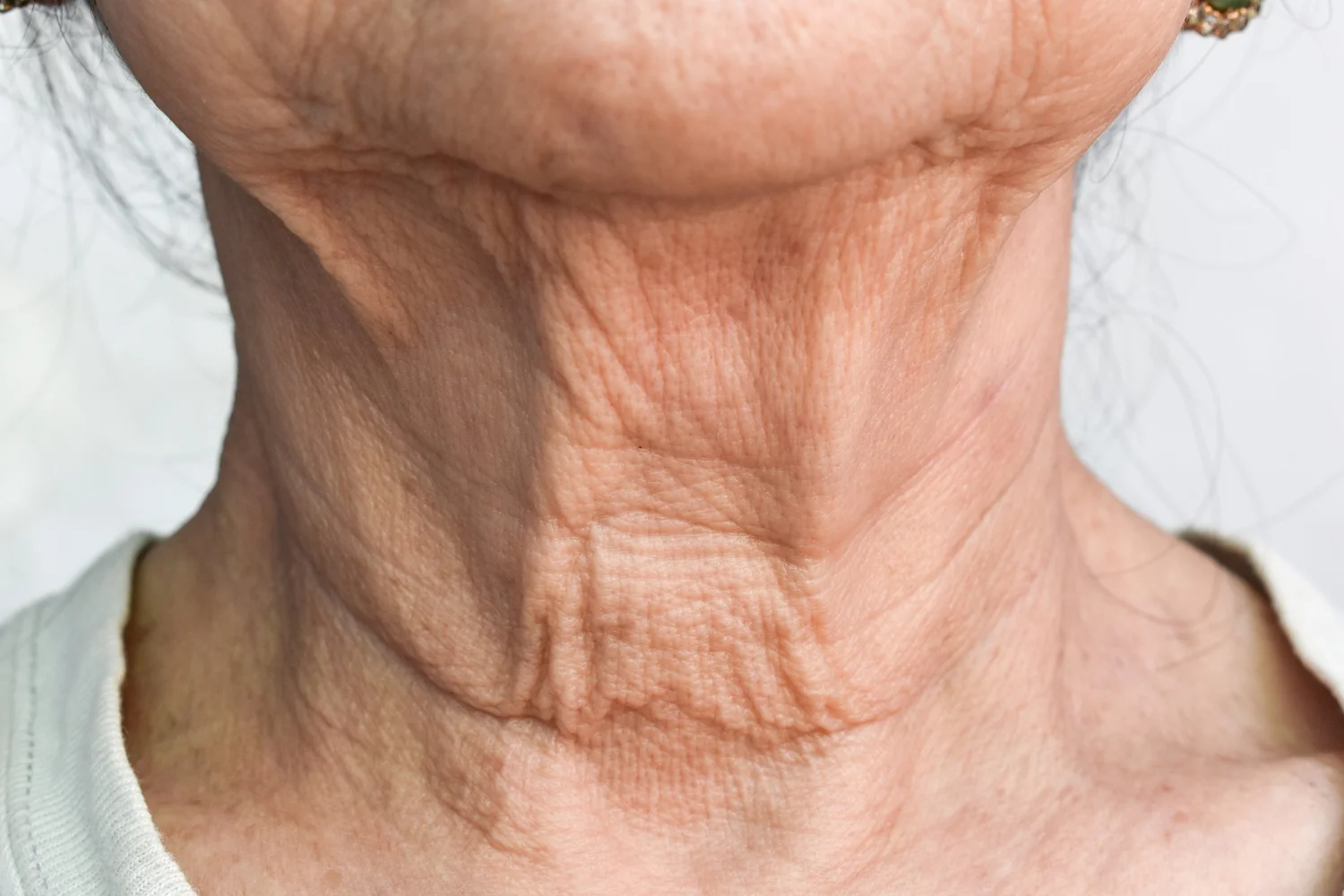
Areas
Face, Neck, Décolletage, Backs of the hands, Scars, small to large areas
Booking
After diagnostic consultation
Price
From €150
Fractional CO₂ laser: what is the recovery like?
Count on 5 to 10 days of redness, swelling and small crusts, then slightly red skin for 2 to 3 weeks. The fractional CO₂ laser vaporises tiny columns of skin and stimulates collagen: a first improvement may appear after a few weeks and continues for 3 to 6 months. A numbing cream is applied before the session.
In brief
- Ablative fractional laser: tiny columns of skin are vaporised, the surrounding skin stays intact.
- Indications: wrinkles, scars (including acne scars), pores and texture, laxity, spots and sun damage.
- Recovery: 5 to 10 days of redness, swelling and crusts, then slightly red skin for 2 to 3 weeks.
- Collagen rebuilds for 3 to 6 months after the session.
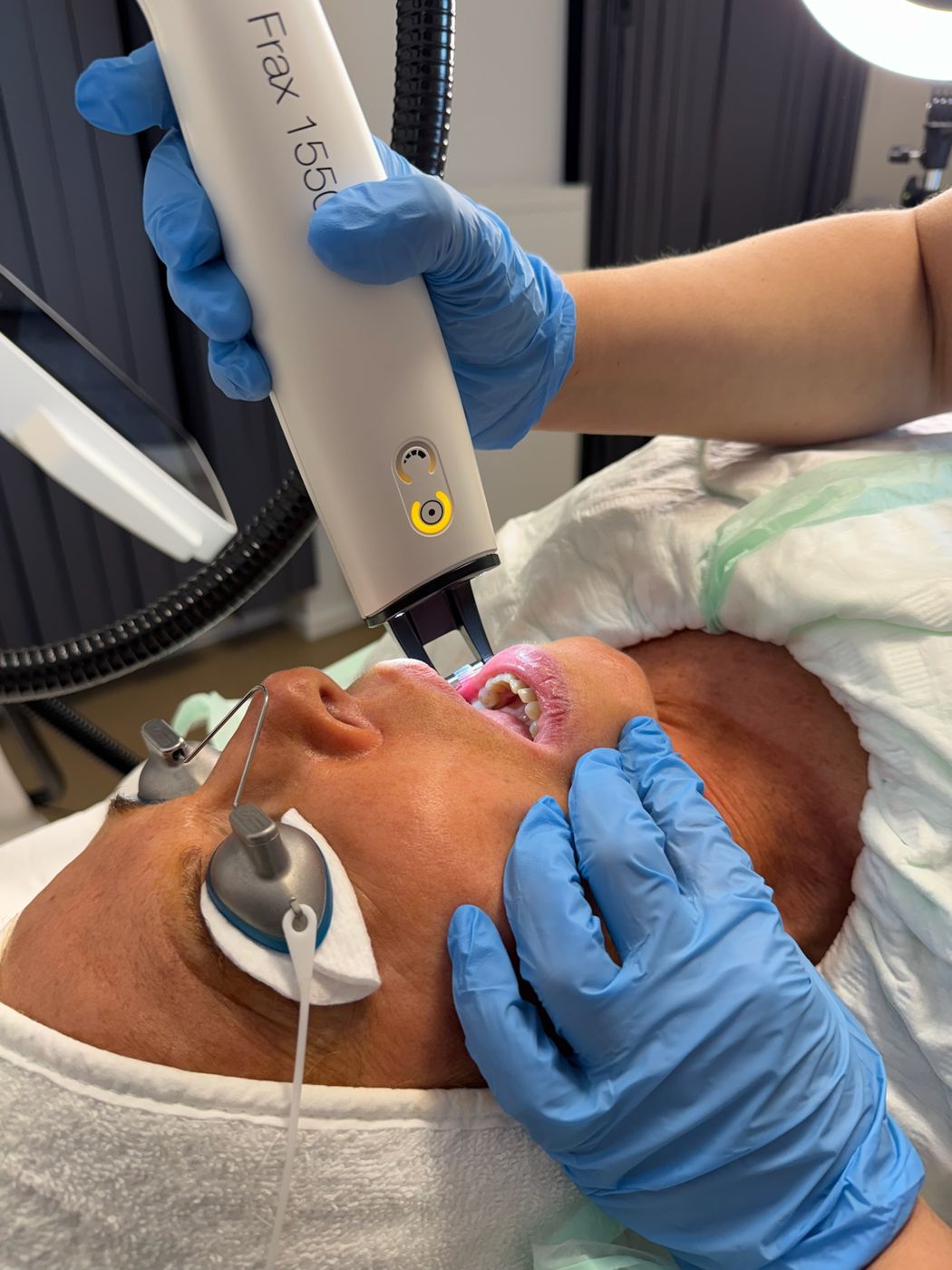
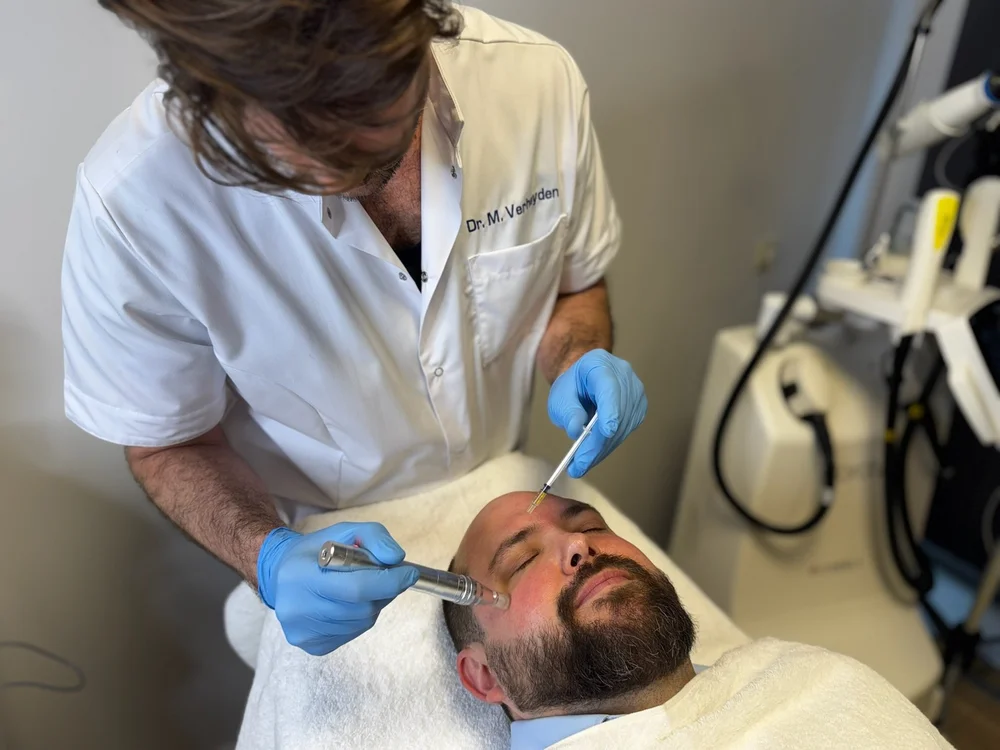
- Gentler alternatives: the Nordlys FRAX laser (non-ablative) or radiofrequency microneedling.
What we do not promise: skin without any scar or wrinkle. The laser can reduce them, but does not erase them completely.
Want to know whether this treatment suits you?Plan my consultation
What does the fractional CO₂ laser involve?
The CO₂ laser works with thermal energy. During the treatment, the skin is heated briefly and in a controlled way at very precise points, which vaporises tiny particles of skin: this is called ablation. The technique is fractional: the laser treats only part of the skin surface by creating small columns, while the surrounding skin stays intact. Recovery is therefore much faster and the risk of complications is lower. The heat activates cell renewal and collagen production, a process that continues for 3 to 6 months after the treatment. The skin can thus become firmer and more even.
The CO₂ laser is indicated for
- Wrinkles and fine lines
- Scars, including acne scars
- Enlarged pores and skin texture
- Skin laxity
- Pigment spots and sun damage
How the treatment works
- Consultation and skin analysis: at a prior consultation, we analyse your skin and discuss your expectations, medical history, the risks, the treatment and the care before and after.
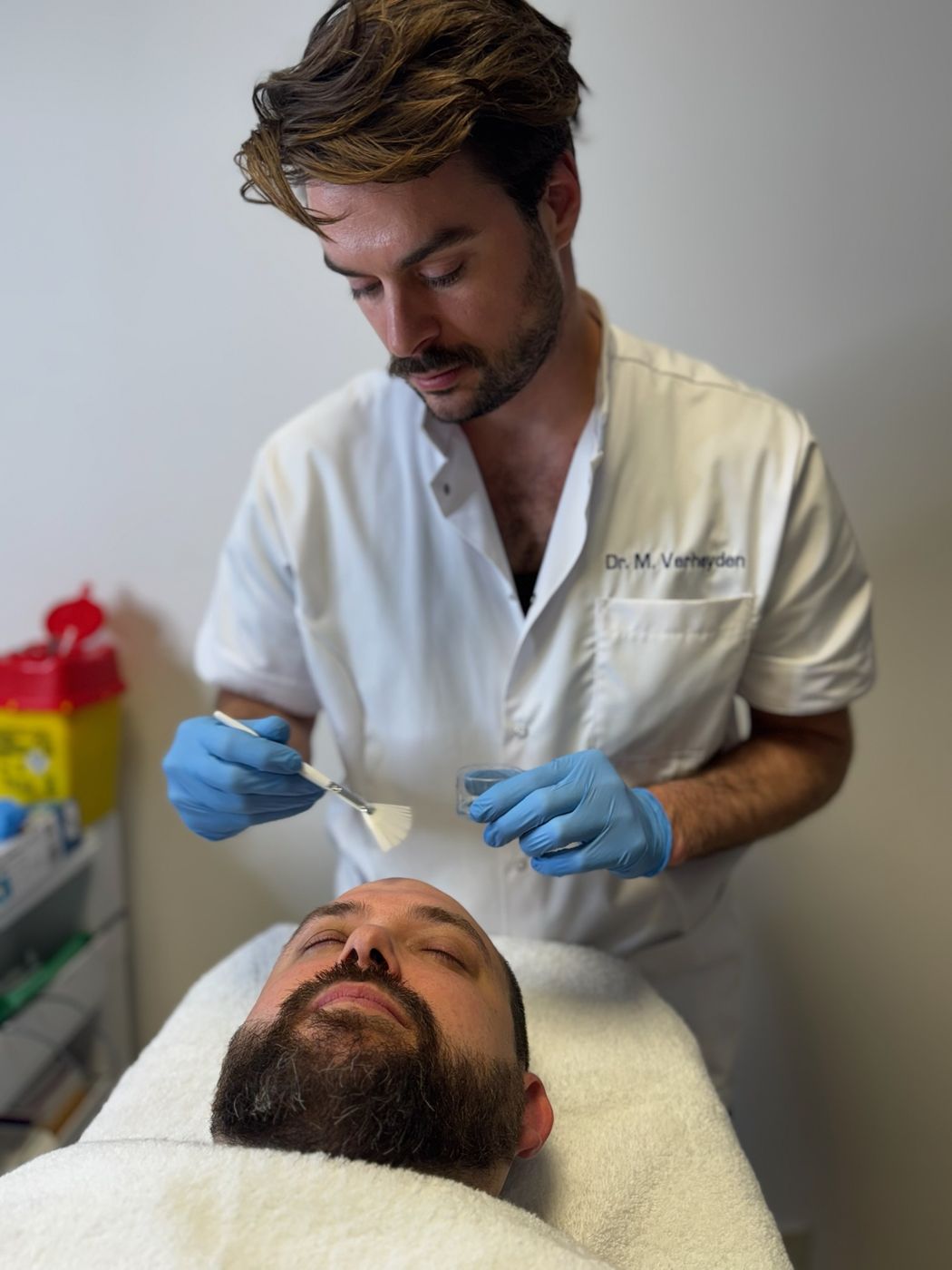
- Preparation: an anaesthetic cream is applied for your comfort.
- The treatment: the laser settings are adapted to the areas treated, for a result adapted to your skin, while limiting the risks.
- Recovery and care: redness, swelling and small crusts are normal for the first 5 to 10 days. The skin often stays slightly red for 2 to 3 weeks. You receive a personal aftercare protocol.
When will I see the result?
A first improvement may be visible after a few weeks, and the improvement continues for up to 3 to 6 months after the treatment, as the collagen rebuilds.
Does it hurt?
The treatment is sensitive, which is why we always apply a numbing cream beforehand. We look after your comfort at every step.
Alternatives with a shorter recovery
For a gentler treatment with less downtime, we also offer radiofrequency microneedling (MRF) or the Nordlys FRAX laser. The latter is a non-ablative laser: it does not vaporise the skin, but still stimulates collagen and improves the texture of the skin or of scars.
Medical information provided by the Arsenal Esthetics team. Results vary from person to person.
CO₂ laser: risks and contraindications
We go through these points with you during the prior consultation. Always mention your current treatments, your medical history and a possible pregnancy.
Possible side effects
- Redness, swelling and crusts for 5 to 10 days, then pink skin for 2 to 3 weeks; itching is possible.
- Temporary hyperpigmentation, especially on olive or dark skin or after sun exposure.
- Reactivation of herpes: a preventive treatment may be prescribed.
- Rarely: infection, hypopigmentation or scarring.
When this treatment is not suitable
- Dark skin (high phototypes): generally not advised, assessed during the consultation.
- Tanned skin or recent sun exposure.
- Isotretinoin treatment in the last 6 to 12 months.
- Active herpes or skin infection.
- History of keloid scars.
- Pregnancy.
Frequently asked questions: CO₂ laser
How long does the recovery take?
Redness, swelling and small crusts are normal for the first 5 to 10 days. The skin often stays slightly red for 2 to 3 weeks. You receive a personal care protocol.
When do you see the result?
A first improvement may be visible after a few weeks; the improvement continues for up to 3 to 6 months, as collagen rebuilds.
Is it painful?
The treatment is sensitive, which is why a numbing cream is applied beforehand and we look after your comfort at every step.
For which skin problems?
Wrinkles and fine lines, scars (including acne scars), enlarged pores and texture, skin laxity, pigment spots and sun damage, on the face, neck, décolleté and hands.
Is there an alternative with less recovery?
Yes: the Nordlys FRAX laser, non-ablative, with 3 to 5 days of recovery, or radiofrequency microneedling. The effect is more gradual.
Is the CO₂ laser suitable for dark skin?
The risk of spots after an ablative laser is higher on olive or dark skin. The doctor assesses your skin type during the consultation and suggests an alternative such as microneedling if needed.
Another question? Ask the secretariat or bring it to your consultation.Plan my consultation